


Chlamydia treatment

Comprehensive, Individual, Anonymous Approach To Treatment.
According to statistics, every year 100 million people get sick with chlamydia in the world, and the number of people infected with chlamydia around the globe, according to the most conservative estimates, reaches one billion. According to WHO and numerous domestic and foreign researchers, urogenital chlamydia is one of the most common sexually transmitted diseases. So search for the most effective means of treatment for so-called non-gonococcal inflammatory diseases of the genitourinary apparatus is a serious problem for modern venereology.
Chlamydia is a sexually transmitted infection caused by chlamydia (Chlamydia trachomatis). It is one of the most common STDs.
Chlamydia has often few or no symptoms. Absolutely without symptoms chlamydia occurs in 46 % of men and 67 % of women. If there are symptoms, they are not clinically apparent.
Symptoms of chlamydia in women:
Women have such symptoms as vaginal discharge (mucous or muco-purulent). They may differ from normal secretions in an unpleasant smell or yellowish tint. There may be moderate pain in the external and internal genitals, itching and burning sensation (during urination) and pain in the lower abdomen — in the small pelvis, increased pain before periods, bleeding between periods. Also, a woman may have general weakness and light fever– symptoms of intoxication.
Symptoms of chlamydia in men:
In men, the symptoms of chlamydia infection appear at the beginning, in most cases, as a slight inflammation of the urethra of a protracted (chronic) course – urethritis, which lasts for at least several months. Men may have scanty glassy discharge from the urethra. In urinating, itching and burning may occur. There can be different pains, mostly mild: it can hurt in the urethra, in the scrotum, in the loin, in the testicles. The temperature may rise-up to 37 degrees. A man may feel a general weakness that is a consequence of intoxication. There may be opacity of urine, the presence of purulent threads in it. Some men may even have blood-tinged discharge at the end of urination or ejaculation.
The following laboratory techniques are used to detect chlamydia:
Microscopic analysis (swab).
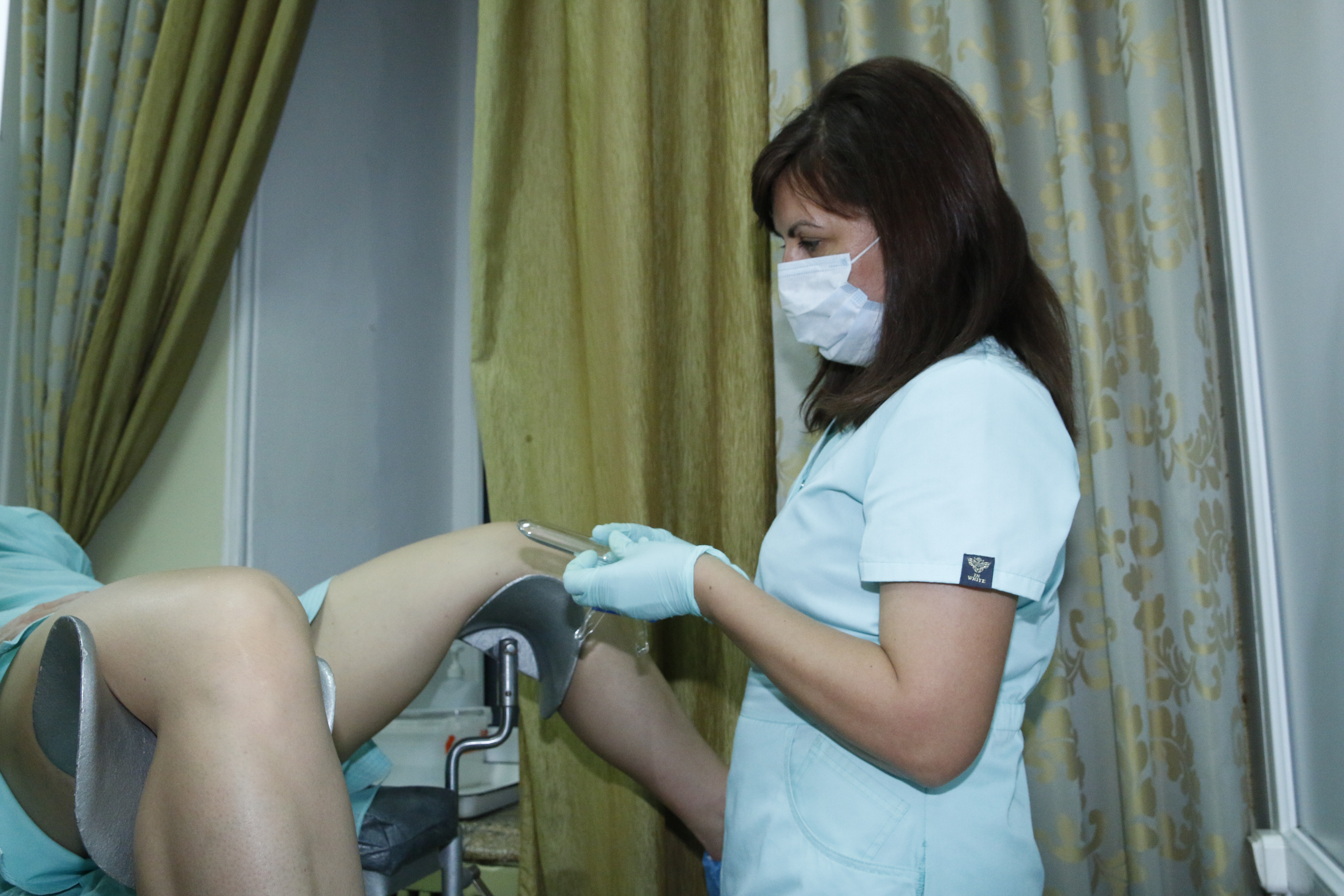
In this type of examination, men take a smear from the urethra, in women – smears simultaneously from the vagina, neck of the womb and external opening of the urethra. This is one of the oldest methods, but it still has not lost its importance.
Smear is good for its availability, because it is inexpensive, and in many state clinics it is done for free. But the probability to detect chlamydia infection in this way is very small – only 15-20 %, since microscopic analysis is able to detect only the presence of an inflammatory process. According to the results of the smear, you can only suspect that is chlamydia, since with chlamydia (the number of white blood cells in the smear is very small or even does not exceed the norm).
Enzyme immunodetection.
Determination of antibodies (IgG, IgA, IgM) to chlamydia in the blood. These antibodies are generated by the body in response to infection. Antibodies to chlamydia are detected when interaction with special medicine containing chlamydial antigens, forming a strong complex with antibodies, which can be detected in different ways.
Besides usual scrapings, blood is also taken for analysis by the polarization fluoroimmunoassay method. The method not only detects the causative agent of a disease, but also it reports at what stage chlamydia is in acute or chronic. The first antibodies appear on the 10-20th day of the disease. Then there are other antibodies that can indicate to the doctor chronic chlamydia, or repeated infection, or the activation of poorly treated earlier chlamydia. But the accuracy of this analysis for chlamydia does not exceed 60 %. However, this method is indispensable when a comprehensive chlamydia diagnosis of the body.
Mini-test.
You can buy it at the pharmacy and get yourself tested for chlamydia. It’s fast, cheap, but the accuracy of these tests never exceeds 20%. Therefore, you cannot rely on the test.
Polymerase chain reaction (PCR).
Polymerase chain reaction (PCR) method. This method today has the greatest sensitivity and reliability – up to 100 %. For analysis you need quite a bit of material, and the results are ready in a day or two. But this method sometimes gives false positive results. To confirm the reliability of the PCR analysis, it is usually necessary to pass the analysis for chlamydia by another method that the doctor will recommend, or to conduct a second examination in a month, three months and six months.
Chlamydia analysis (cultural method) with determination of sensitivity to antibiotics.
Of all the methods of chlamydia diagnosis, this is the most expensive and time-consuming method — the results of the tests have to wait for several days. However, these disadvantages are more than compensated: if the analysis for chlamydia by inoculation gives a positive result, there can be no doubt about the presence of these bacteria in the body. Advantage of this analysis is in the process of inoculation is determined from what antibiotic your infection will die. Exactly your infection, not your wife / husband, boyfriend or girlfriend. The main point of inoculation is that the material taken from you for analysis is “inoculated” of a special medium.
And “grow”. After some time, the size and nature of the clump of microbes can be judged, what has grown. Inoculation detects chlamydia in 70-90 % of cases.
The immunofluorescence method— direct immunofluorescence (IF)
This method is currently the world’s main method of diagnosis. With the help of IF for the first time it became possible to quickly and accurately (in just 30-40 minutes) to detect chlamydia infection in the test material. The smear fixed on the slide is treated with fluorescent antibodies and examined under a fluorescent microscope after a 20-minute exposure. IF method is highly sensitive, specific and easy to perform. The disadvantage of the method is that the detection of the outer membrane of chlamydia is not yet proof of the existence of a viable organism. It should be taken into account when establishing a cure for chlamydia. In addition, the IF method is not sensitive enough for asymptomatic and low-intensity infection.
Mandatory examination (analysis for chlamydia) and if necessary treatment, is subject to all partners who were in sexual contact with the patient. During the chlamydia treatment (chlamydia treatment in men and chlamydia treatment in women) and regular medical check-up, sexual life is not recommended or a condom is used.
During treatment, alcohol is prohibited; it is also recommended to limit the use of dairy products.




Snezhko Svetlana
Cosmetologist. Dermatovenerologist.
Association of Dermatovenereologists and Cosmetologists of Ukraine
Working hours
Monday- Friday: 9.00-19.00
Saturday / Sunday: day off