


Keloid scar
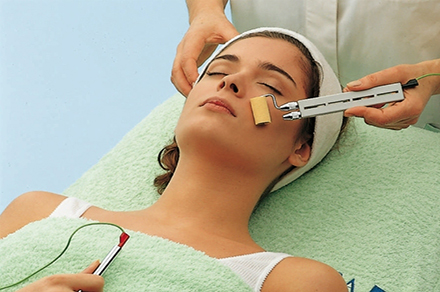
A comprehensive, individualized, anonymous approach to treatment.
One of the possible consequences of skin integument damage is an increased production of collagen, resulting in the formation of post-traumatic scars is far from ideal from an aesthetic point of view.
Keloid scar (keloid, from Greek. keleis-tumor and eidos-type, similarity) is a tumor- like lesion of connective tissue fibers. One of the most unpleasant types of scarring, which causes both physical and psychological inconvenience to its owner. External keloids are dense tumor-like formations of bluish or red color. Their feature is a constant tendency to increase: this scar often extends beyond the wound.
Keloid scars can be of various shapes: stellate, fan-shaped, or have the appearance of linear strands, with sharp borders that often protrude above the skin level. As a rule, keloids are formed in the area of the shoulder girdle, chest or neck, and less often-on the face. It is not uncommon for keloids to appear on the earlobes, as a complication after piercing them.
The appearance of keloids is often accompanied by pain, itching and burning. In addition to the ability to constantly grow, they are characterized by frequent relapses after treatment, as a result of which the size of the visible part of the scar may exceed the size of the wound by several times.
Causes of keloid scar formation
Currently, the exact cause of the formation of keloid scars has not been determined. Like other types of scars, they can occur as a result of surgery, healing of burns and wounds, infectious diseases (chicken pox, furunculosis, lupus, etc.) and acne. However, keloids can be also formed several months after the wound has healed. In addition, in rare cases, they are capable of spontaneous appearance on unchanged skin, for no apparent reason. According to researchers, there is a category of people who have a genetic tendency to form keloid scars.
The mechanism of keloid formation occurs from an abnormality of the development of connective tissue. In this regard, it would be more correct to speak not about a separate scar, but about the whole process known as keloid disease. According to medical statistics, about 10-20 % of all patients with scarring of the skin are owners of keloid scars. Among them, 85% are women, which is explained by the presence of many predisposing factors (ear punctures, piercings, frequent plastic surgery, skin resurfacing, etc.)
The most likely cause of keloid scar formation is considered to be an abnormality of connective tissue autoregulation mechanisms: the ratio of collagen-collagenase changes towards collagen. Collagen synthesis in keloid is eight times higher than in hypertrophic scars and twenty times higher than in normal skin.
Classification of keloids
Keloids are divided into true and false. True occurs spontaneously, most often – on the skin of the chest, the upper third of the shoulder, in rare cases – on the entire body. False keloid can develop in any place where the skin was injured. Currently, this classification has no special clinical relevance and is relative nature.
Much more important in the treatment of keloid scars is their age. Based on this, they are divided into 2 types:
“Young” keloids (3 months — 5 years) have a smooth, shiny surface, reddish color and actively develop.
“Old” keloids (more than 5 years old) have an uneven, wrinkled surface, paler color and almost do not develop.
Treatment of keloid scars
Currently, no universal method has been developed that would be suitable all patients without exception. In each individual case, the effectiveness of a particular method will be different, and all of them can be used separately or as part of a comprehensive treatment program.
Unfortunately, due to the fact that the nature of keloid scars is not well studied, none of these methods can fully guarantee the absence of relapse. The most effective is considered to be combined treatment, in which several therapies are used.
The complexity of treatment is that many patients go to the doctor having already tried traditional medicine, which leads to significant changes and growth of collagen tissue. Sometimes after such treatment, the scars begin to grow much stronger, so you should not self-medicate in any case. Only a qualified doctor can accurately diagnose the condition of the scar and choose the most effective treatment regimen.


Snezhko Svetlana
Cosmetologist. Dermatovenerologist.
Association of Dermatovenereologists and Cosmetologists of Ukraine
Working hours
Monday- Friday: 9.00-19.00
Saturday / Sunday: day off