


RETINOID THERAPY

A comprehensive, individualized, anonymous approach to treatment.
Retinoids are any agents that can cause specific biological responses as a result of binding and activation of receptors of retinoic acid.
The retinoids are a class of chemical compounds, its biological forms also structural synthetic derivatives that differ substantially from isoprene structure of natural vitamin A. However it acts similar through activation of nuclear retinoic receptors: they regulate the processes of proliferation, differentiation and intercellular communication. Into the group of retinoids there is fundamental heterogeneity for both properties and clinical results.
Today, retinoids is one of the most effective groups of drugs.
Their introduction into practice was a turning point in the treatment of certain dermatoses. In recent years, dermatocosmetologists have become more likely to use not only topical, but also systemic retinoids in the treatment of acne patients. This is due to the accumulated experience of their use in real clinical practice in Ukraine, as well as the confidence of specialists in the high safety of systemic retinoids for long- term use in the treatment of patients with severe forms of acne.
Retinoids forward to the normalization of terminal cell differentiation, slow down the hyperproliferation of the epithelium of the excretory ducts of the sebaceous glands, the formation of detritus. Due to this, the production of sebum is reduced, its allocation facilitates, the structure normalizes, and the inflammatory response around the glands reduces.
In addition, these drugs have an anti-inflammatory and immunotropic effect in a purulent focus by inhibiting the inflammatory mediator – leukotriene B4. With external and systemic use of retinoids, antiseborrheic, sebostatic, anti-inflammatory, kerato-and immunomodulatory effects are indicated. They activate the regeneration processes in the skin, stimulate collagen synthesis, and increase the production of mucopolysaccharides and glycosaminoglycans.
Main indications for the use of retinoids:
- various manifestations of acne;
- seborrhea;
- rosacea;
- Favre-Racouchot disease (tretinoin);
- perioral dermatitis (isotretinoin);
- lichen acuminatus (etretinate);
- complicated forms of psoriasis;
- congenital ichthyosis;
- Devergie’s lichen;
- Darier’s disease ( acitretin ).
Retinoids for external therapy are prescribed for a long time. The minimum course of treatment is 3 months, after the end of the course, it is necessary to prescribe medications with a preventive purpose to prevent an exacerbation of the disease.
Retinoids enter the skin directly through the horny layer (the transepidermal pathway) or through the excretory ducts of the glands (the transfollicular pathway). A gradient of retinoid concentration is created in the skin, decreasing towards the dermis. In the epidermis, retinoids control the processes of keratinization and pigmentation; in the dermis, they help restore the intercellular matrix, which gradually degrades during process of aging or ultraviolet irradiation.
Systemic therapy is indicated for patients with moderate or severe forms of acne, especially if there is scarring and if people are in severe depression, body dysmorphic disorder on the background of light flow with no effect from external treatment after 3 months of use. Systemic therapy has side effects, a small interval between therapeutic and toxic doses, so it should be used only if there are strict indications!


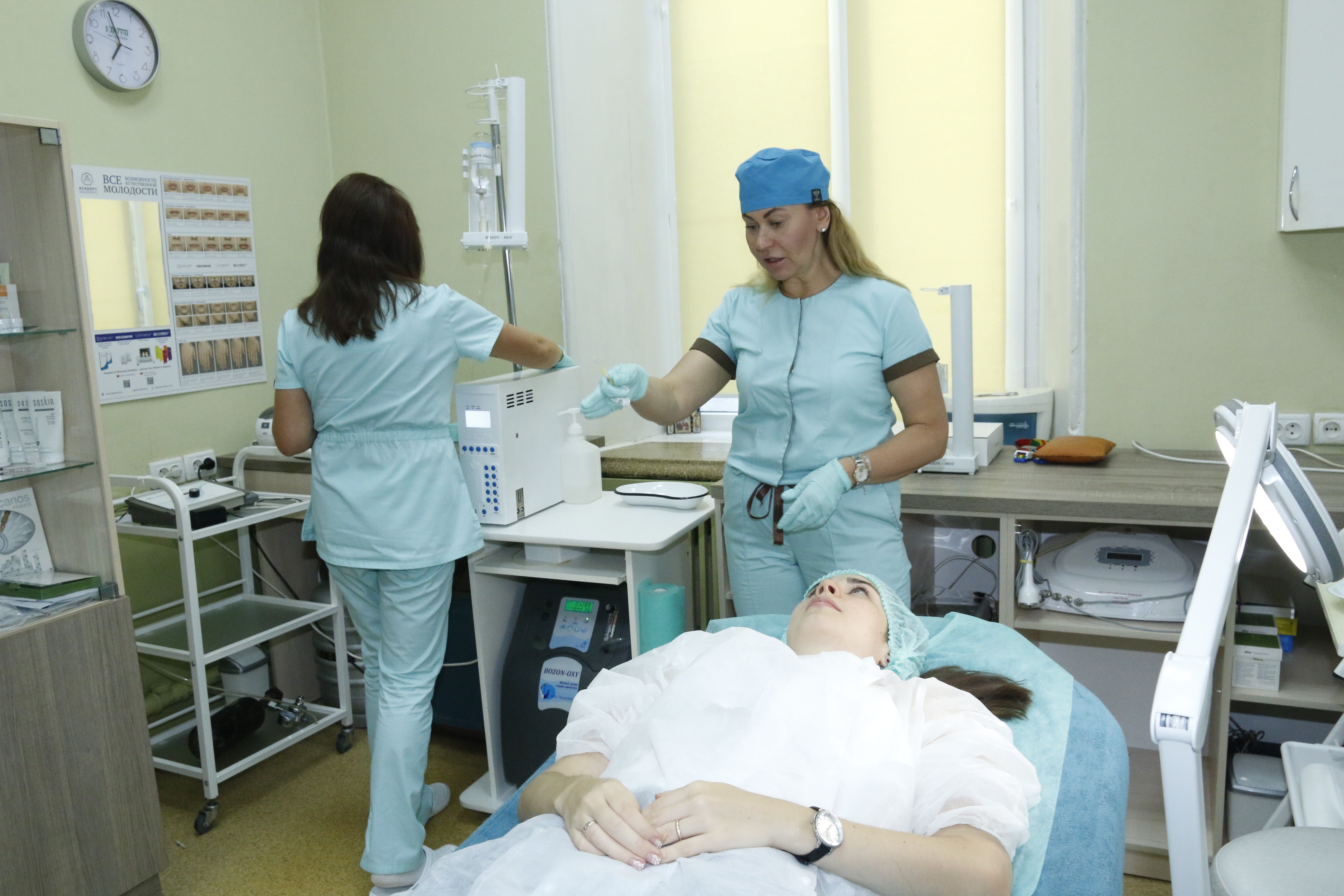

Snezhko Svetlana
Dermatovenerologist.
Association of Dermatovenereologists and Cosmetologists of Ukraine
Working hours
Monday- Friday: 9.00-19.00
Saturday / Sunday: day off